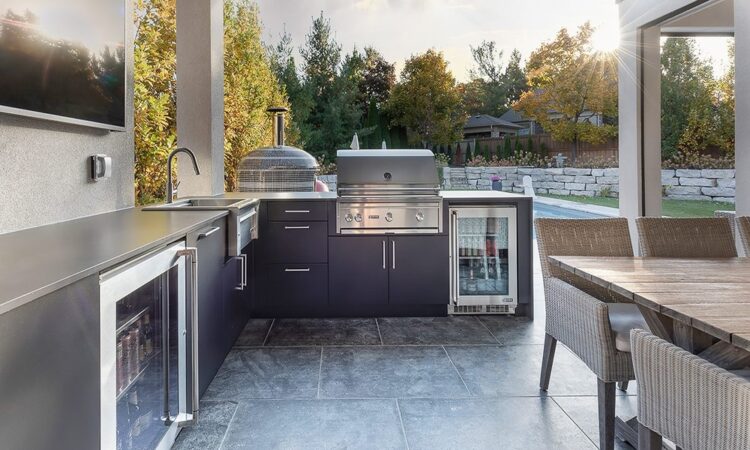
The outdoor kitchen category is divided into seven distinct cabinet types based on their specific performance traits. Orlando outdoor kitchen cabinets benefit from knowing these categories, since weather, cooking habits, and daily wear hit each material differently. Real work happens in matching a homeowner to the type that actually fits their situation.
Personalities differ sharply here. A few are built purely for brutal weather. Others trade some weatherproofing for the kind of warmth only natural materials carry. A handful split the difference. What determines the right pick? Exposure levels, how often someone actually cooks outdoors, and whether the cabinetry should blend into the landscape or stand apart from it. Outdoor kitchen cabinets orlando builds across all seven, and the real work happens in matching a homeowner to the type that actually fits their situation.
- Stainless steel cabinets – They are constructed from corrosion-resistant, grill-side heat-resistant, and easy-to-clean 304-grade steel. This brushed finish prevents small scuffs and keeps water out entirely. Built-in appliances look more professional if stainless steel is next to them.
- Marine-grade polymer – Marine-grade polymer isn’t afraid of water, humidity swings, or hours of direct sunlight. Solid colors and woodgrain prints are available, and stainless hardware is a must. It’s ideal for poolside kitchens, coastal homes, and any setup that is going to take rain without a roof.
- Teak and hardwood – Nothing synthetic matches what teak brings to a space. The grain runs dense, natural oils fight back against the weather, and boatbuilders have leaned on this wood for good reason across generations. Covered patios are where teak thrives. Oil it when the seasons change, and the honey tones stay vivid; skip the oiling, and it drifts toward a silver patina that has its own appeal.
- Powder-coated aluminum – Light to handle, tough to damage, and available in color ranges no other material matches, powder-coated aluminum covers the ground that the others can’t. Extruded frames get their coating baked on, which means chips and fade resistance are built in. Homeowners lean this way when exact color matching matters, whether that’s pulling from exterior trim, surrounding stone, or a specific landscape palette. Rust isn’t part of the conversation.
- HDPE cabinets – It looks like wood from a reasonable distance, but underneath it behaves like industrial plastic. The woodgrain is machined directly into solid panels, so there’s no laminate waiting to peel off in five years. Moisture, termites, and sun damage- none of it lands. For homeowners who want the warm look without the seasonal checklist, this material makes sense.
- Masonry stucco cabinets – There is nothing modular about these cabinets. Buildings with stucco or brick begin with block framing, which is then covered in stucco, tile, or stone veneer. A structurally sound result is part of a house. As long as they’re sealed properly, they weather the same as exterior walls.
- Composite panel cabinets – Using polymer-bound recycled fibers, rigid composite panels can resist weathering. Their aesthetic combines organic and engineered elements in a pleasing way. The use of composites provides long-term reliability without committing to metal, wood, or stone. Despite its flexibility, its durability stands the test of time.
Rather than chasing trends, Sunset Outdoor Kitchen Cabinets delivers honest results to its clients. The right cabinet isn’t the popular one. It’s the one still looking right in the backyard fifteen years later.