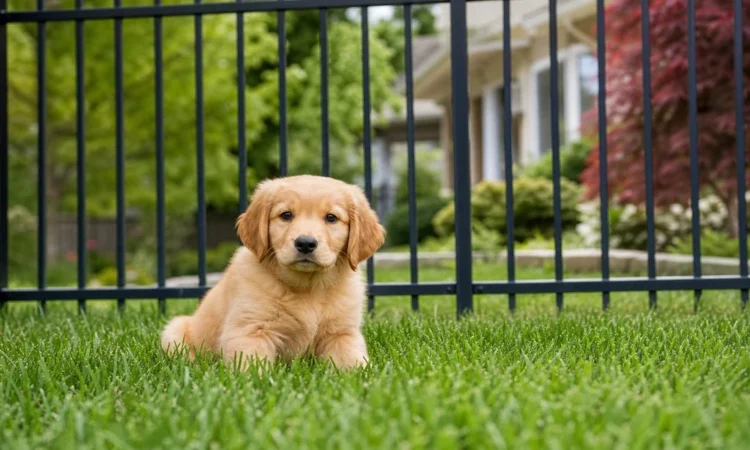
A new puppy can turn your yard into a potential minefield of escape. The gap next to the shed, the gap at the corner behind the trash cans, and the gate that doesn’t quite close all seem insignificant until a puppy has free rein.
Scheduling a fence project before bringing home your new puppy allows you to examine the yard from the perspective of the much smaller, much faster, and much more curious canine you are soon to have. The goal is not to merely enclose the property but to provide a safe environment for your puppy to exercise, explore, and grow in without escaping onto a street, into a neighbor’s yard, or over into a pool area.
Where Are the Likely Escape Points?
Before you even start picking out colors and styles, walk the entire perimeter of the yard with the escape points in mind.
Look for:
- Gaps under the fence
- Spaces next to utilities, sheds, or walls
- Broken panels and boards
- Wide slat spacing
- Irregular corners
- Side yards that lead into the front yard
A tiny pup may be able to slip through spaces that seem fine when you’re walking upright. If you expect your puppy to stay small, the spacing on standard picket fencing may not be adequate, and the design may require tighter spacing, solid panels, or wire mesh on the inside.
A fence contractor can also identify difficult slopes – more on fence builder if you want that route. When a fence is built across a steep hillside, a straight fence will tend to leave a widening gap at the bottom of a panel as it gets lower on the slope. A stepped or step-fitted design, or perhaps just laying boards along the bottom of the fence, can prevent the opening from becoming the next great puzzle for the puppy to solve.
Gates Must Work for Daily Routines
The placement of the gates requires some serious consideration. Your yard may appear completely enclosed on paper, but if the one entry point for the yard is impractical for everyday use, you won’t really have an enclosed space.
Think about how you will be using the yard on a day-to-day basis. Do your garbage cans travel through a narrow side yard once a week? That pathway must be gated, and ideally, the gate must accommodate the garbage cans without being so cumbersome that people leave it unlatched after emptying them.
In terms of keeping the puppy contained, having a self-closing hinge and secure latch can be very helpful. The latch must be located above the reach of the dog but easy enough for an adult to access. Ensure that the gate can swing open without being blocked by terrain, rocks, or a bottom gap.
And before the project starts, decide who is responsible for ensuring the gate to the side yard is latched after throwing out the garbage.
The Bottom Needs Digging Protection
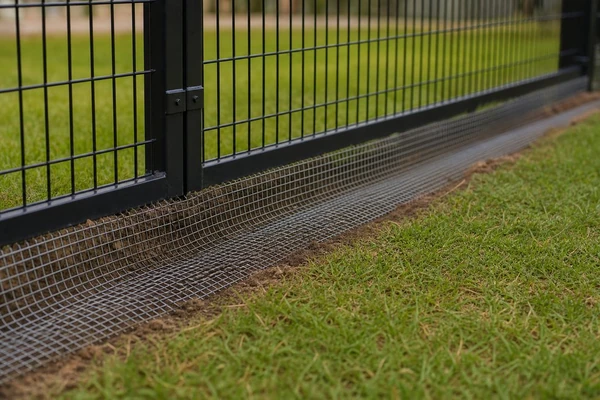
Pups (see more here) love to dig, particularly near fences where they can hear, see, or smell things going on outside. Even if digging isn’t currently a problem, plan for the possibility during the build.
Your fence professional may suggest lowering the fence to grade level, installing a bottom rail, or using a physical barrier underneath the fence along the vulnerable sections. How this is handled will depend on the specific yard, including soil and drainage conditions. Don’t fill all the low spots with anything that could easily wash away or be moved by a dog.
Check the transitions between existing structures and new fences. The space between a new fence and an old deck, garden wall, or shed might be just wide enough for a pup to squeeze through and easily overlooked.
The Pool Area Requires Its Own Barrier
If the property includes a swimming pool, consider the pool area a separate zone from the yard. Local building codes often require specific construction and specifications for pool barriers (look at https://www.who.int/news-room if you want numbers), such as height, latch mechanisms, gate swing, and gaps beneath the fence. These requirements should be considered before you finalize your design.
If your yard abuts a neighbor’s yard, you’ll want to consider both aesthetics and function. A solid fence might prevent the dog from being distracted by sights on the other side, while a picket fence allows for better air circulation and viewing. Be careful to place any fence properly with respect to existing gardens, trees, and buildings.
A Final Inspection Reveals Small Hazards
After the construction is finished, walk the perimeter at the puppy’s eye level. Inspect each gate joint and look for light coming under the fence panels or next to the structures. Clear any debris, sharp bits, or stray hardware from the yard before allowing the puppy to roam.
Have the contractor give you a final diagram and documentation regarding the gate latching mechanism and conduct a final perimeter inspection the day before the dog arrives.