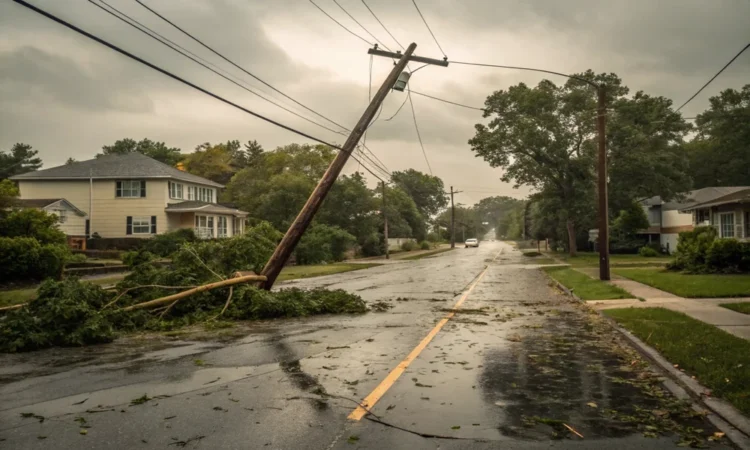
The Gulf Coast regularly reminds people how much a home depends on electricity. Hurricanes, derechos and the occasional hard freeze have left Fort Bend County neighborhoods dark for hours and sometimes for days. When Hurricane Beryl came ashore, more than two million homes and businesses across the Houston region lost service. Many families found out at the same moment that refrigerators, garage doors, medical devices and internet routers all stop together.
Watching the lights flicker back on is a real relief, but it can hide problems that started during the outage. A surge at the moment of restoration, water in underground lines and generators connected the wrong way can all leave damage you can’t see. For Sugar Land homeowners who want a licensed set of eyes on those issues, Thor Enterprises handles emergency outage calls, panel upgrades and underground service line repairs. Those are the three parts of a home’s system that storms stress the most.
What follows is a walk through a home’s electrical system. It starts where utility power enters the property and ends at the outlets used every day. The goal is simple: know what to look at, what to leave alone and when a professional should take over.
Start Where the Power Enters
In many master planned communities around Sugar Land, power arrives through buried cables instead of overhead lines. That keeps wires away from wind and falling branches, which is a real advantage during hurricane season. Underground service has its own weak points, though.
The region’s clay soil shrinks during dry spells and swells after heavy rain. Over the years, that movement can stress conduit and splices. Floodwater can also seep into damaged sections of the line. The result is often a problem that shows up weeks after a storm rather than during it.
Watch for lights that dim noticeably when the air conditioner or dryer starts. Another clue is a home where half the rooms work and the other half stay dead even though no breakers have tripped. That usually points to a lost leg of power somewhere between the transformer and the panel. Responsibility for that stretch of cable can differ from one property to the next, so a call to the utility helps sort out who owns which section before repairs begin.
The Meter Base Tells Its Own Story
The gray box on the outside wall is easy to ignore until something goes wrong with it. Flying debris, a fallen limb pulling on an overhead service drop, or water entering through a cracked cover can all damage the meter base.
Utilities generally won’t reconnect service to a damaged meter base. A licensed electrician has to repair it first, and some jurisdictions require an inspection before the utility returns. If the box is pulled away from the wall, has scorch marks or makes a buzzing sound, keep your distance. This is not a do it yourself repair. Even with the main breaker off, the utility side of the meter stays energized.
What the Panel Goes Through
When crews restore a neighborhood, power can come back in uneven bursts. Breakers may trip. Sensitive electronics may fail. Older panels with worn bus bars or loose connections often show their age right after a long outage.
Water is the bigger concern. Breakers, panels and wiring that sat in floodwater generally need replacement rather than drying out. Corrosion and residue can cause failures long after the surface looks clean. The Electrical Safety Foundation International publishes post storm recovery guidance that explains which water damaged equipment must be replaced and which items may be reconditioned. It’s worth reading before anyone flips a main breaker back on in a flooded garage.
Storms also reveal panels that were already working too hard. Many homes built in the 1980s and 1990s now carry EV chargers, larger air conditioners and home offices their original panels were never sized for. If breakers trip repeatedly after restoration, the outage may not be the cause. It may have simply exposed an overloaded system.
A few signs suggest calling an electrician instead of resetting and moving on:
- A breaker that trips again immediately or within a day of being reset
- A burning smell, discoloration or melted plastic around outlets, switches or the panel
- Lights that seem much brighter or dimmer than they did before the storm
- Outlets or switch plates that feel warm to the touch
- Any wiring, outlet or appliance that sat in water, even briefly
- Part of the home still without power after the rest of the street is back
Generators Only Help When Connected Properly
After Beryl, home standby generators became a common sight across Fort Bend County. Portable units sold out at local stores for weeks. Both can keep a family comfortable, but the way they connect to the house matters as much as their size.
Plugging a portable generator into a dryer outlet with a double male cord can send power backward through the home’s wiring and out to the utility lines. That puts line workers and neighbors at serious risk, and it can damage the generator and the panel. A transfer switch or a code approved interlock kit keeps generator power inside the house and separate from the grid.
Carbon monoxide is the other danger. FEMA’s power outage preparedness page recommends running generators outdoors and well away from windows, doors and vents. It also advises battery backed CO alarms on every level of the home. Garages, even with the door open, are not safe places to run one.
For permanent standby units, proper sizing starts with an honest look at what needs power during an outage. Some households only want the refrigerator, a few lights and the internet running. Others want the whole home, central air included. That choice affects generator size, fuel line requirements and whether the panel needs an upgrade first.
Businesses Feel Outages Differently
A dark office or restaurant loses more than comfort. Refrigerated inventory, point of sale systems, security equipment and server closets all depend on clean, steady power. A rough restoration can damage motors and electronics that cost far more than a home appliance to replace.
Commercial properties benefit from planned restart sequences. Bringing large loads back gradually prevents a sudden surge of demand on the building’s system. Whole building surge protection at the main service is another layer worth considering, along with a written record of equipment condition for insurance claims. For businesses in strip centers or shared buildings, coordinating with property managers before storm season saves time when every tenant is trying to reopen at once.
Preparing Before the Next Storm Season
The calmer months between hurricane season and summer heat are the best time to look at a home’s electrical system. Electricians have more scheduling room, and any problem they find can be fixed without the pressure of an approaching storm.
Simple steps go a long way. Label every breaker clearly so anyone in the household can shut off a circuit in the dark. Take a photo of the panel and its label for reference. Make sure every adult in the home knows where the main disconnect is. A whole home surge protector installed at the panel adds protection that power strips alone can’t match.
Storms along the Texas coast are not going away, and outages will keep coming with them. What changes the outcome is how prepared the system is beforehand and how carefully it is checked once power returns. A home that comes through a storm with its wiring, panel and service line in good shape is one that will be ready the next time the sky turns dark over Fort Bend County.